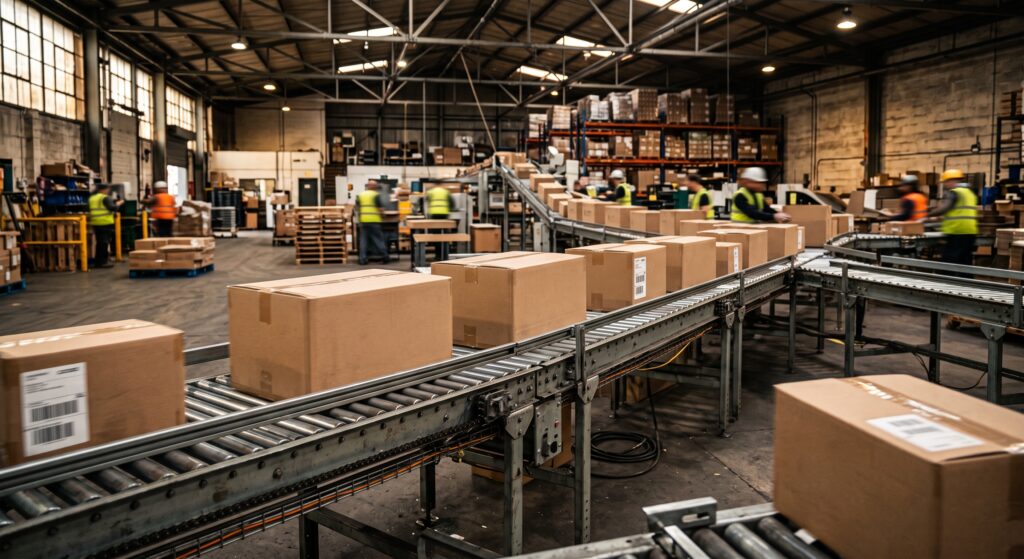
Most manufacturers pour their automation budget into the front and middle of the line — filling, forming, processing — while the end of the line quietly becomes the bottleneck. Case packing, palletizing, and wrapping are often the last stations to get modernized, even though they’re where damaged product, safety incidents, and shipping delays tend to pile up. If your upstream processes are running smoothly but problems keep surfacing right before product leaves the building, your end-of-line packaging may be the weak link. Here are five signs it’s time for an upgrade.
1. Your Upstream Line Outpaces Your Packaging Station
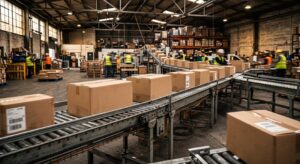
If your processing or filling lines have been upgraded in recent years but case packing and palletizing still run at the same speed they did a decade ago, you’ve likely created a bottleneck at the worst possible spot — right before product ships. Product piling up before packaging, operators struggling to keep pace, or shifts ending with unprocessed backlog are all signs that your end-of-line equipment can no longer keep up with the rest of your operation.
2. Manual Labour Is Becoming a Liability
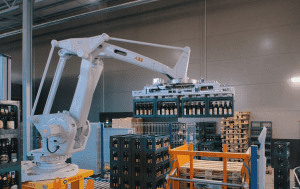
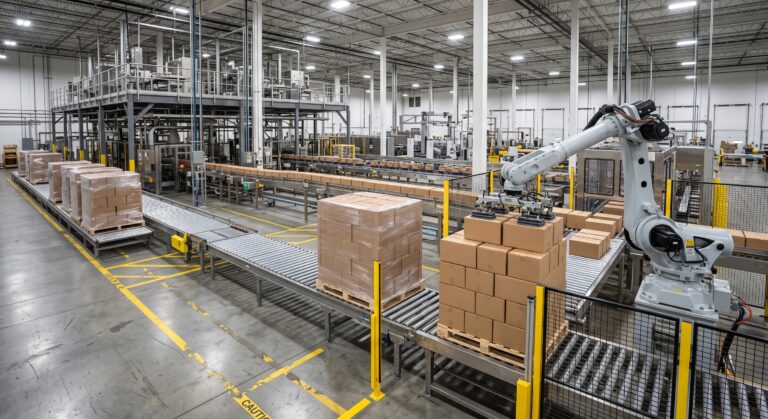
Constant lifting, stacking, and case forming take a toll on workers, and in most regions, labour for these repetitive tasks is getting harder and more expensive to find. If you’re seeing rising injury reports, high turnover in packaging roles, or simply can’t staff the line reliably shift after shift, that’s a strong signal that automated case packing or palletizing would remove both the safety risk and the staffing pressure.
3. Product Damage and Customer Complaints Are Creeping Up
Crushed cases, toppled pallets, or inconsistent stacking patterns don’t just cost you product — they cost you customer trust. Manual and older packaging processes are far more prone to inconsistency than automated systems with built-in quality control and vision inspection. If damage claims or complaints about pallet condition have become a recurring line item, it’s usually not a training issue — it’s an equipment issue.
4. Changeovers Eat Up More Time Than Production Does
Growing SKU variety is one of the biggest pressures on modern food and beverage producers, but older packaging equipment often wasn’t built to handle it. If switching between box sizes, pack patterns, or product formats takes your team 30-plus minutes of manual adjustment, you’re losing valuable production time to changeovers rather than output. Modern case packers and palletizers are designed for fast, often tool-less format changes, so variety doesn’t come at the cost of throughput.
5. You're Flying Blind on End-of-Line Performance
If you can’t easily answer how many boxes or pallets you produced yesterday, where downtime occurred, or which shift is most efficient, your end-of-line equipment likely isn’t connected to the rest of your operation. Older packaging systems often run in isolation, disconnected from Manufacturing Execution Systems (MES) or warehouse management tools. Without that data, it’s nearly impossible to spot recurring bottlenecks or make informed decisions about where to invest next — one of the clearest signs that your packaging setup has fallen behind the rest of a modern, connected factory.
The Bottom Line
End-of-line packaging is easy to overlook because it sits at the very end of the process — but that’s exactly why problems there ripple back through the whole operation, from safety incidents to shipping delays to customer complaints. If two or more of these red flags sound familiar, it’s worth taking a closer look at where your case packing and palletizing equipment stands today, and what an upgrade could mean for throughput, safety, and product quality.
If you’re ready to see what that upgrade could look like for your line, get in touch with our team — we’ll help you find the right fit for your product, volume, and budget.