Efficient and streamlined food packing processes are vital for ensuring product quality, reducing costs, and meeting customer demands. While packaging materials and design play a crucial role, it is the equipment and automation that truly transform the packing landscape. In this article, we will explore the top challenges encountered in food packing and delve into innovative solutions that leverage equipment and automation to overcome them effectively.
Introduction to the Food Sector
The food sector is a dynamic and multifaceted industry that plays a vital role in supporting the health and well-being of consumers worldwide. At the heart of this industry lies food packaging, which serves as a critical barrier against contamination, helps preserve freshness, and extends the shelf life of food products. As consumer preferences shift and environmental concerns grow, the food packaging industry is rapidly evolving to meet new demands. Food manufacturers are increasingly turning to innovative packaging solutions, such as sustainable packaging made from biodegradable materials, recyclable materials, and reusable packaging, to reduce packaging waste and minimize their carbon footprint. These advancements not only address regulatory requirements but also align with the values of today’s environmentally conscious consumers, making packaging a vital component in the modern food sector.
Enhancing Food Safety
Food safety remains a top priority in the food sector, and packaging plays a crucial role in enhancing food safety by preventing contamination and spoilage. With stringent food safety regulations in place, food manufacturers must carefully select packaging materials that are safe for food contact and capable of withstanding various environmental conditions. Innovative packaging solutions, such as modified atmosphere packaging, help extend shelf life and maintain the quality of food products by creating optimal storage environments. Additionally, advancements like digital printing enable clear labeling and traceability, ensuring transparency and accountability throughout the supply chain. By leveraging these technologies, the food sector can better protect consumers and uphold the highest standards of food safety.
Environmental Impact
The environmental impact of food packaging is an increasingly important issue, as packaging waste contributes to pollution, landfill overflow, and climate change. In response, the food packaging industry is embracing more sustainable materials and practices, including the use of biodegradable materials, recyclable materials, and reusable packaging. Many companies are adopting circular economy principles to reduce waste, boost recycling rates, and encourage more sustainable consumption patterns. Technological advancements, such as digital printing, are also helping to minimize the use of packaging materials and address environmental concerns. By prioritizing sustainability, the packaging industry is working to reduce its environmental footprint and support a healthier planet.
Packaging Materials and Design
Packaging materials and design are at the forefront of innovation in the food packaging industry. Food manufacturers are increasingly adopting sustainable materials, such as biodegradable plastics, paper-based packaging, and recyclable materials, to meet both regulatory requirements and consumer preferences. Packaging design is evolving to prioritize convenience, portability, and sustainability, reflecting the changing needs of today’s consumers. Innovative packaging solutions, including modified atmosphere packaging and smart packaging, are helping to extend shelf life, reduce food waste, and enhance consumer engagement. Furthermore, thoughtful packaging design allows companies to communicate their commitment to sustainability and appeal to eco-conscious consumers, making packaging a powerful tool for brand differentiation in a crowded market.
Food Waste Reduction
Reducing food waste is a critical challenge in the food sector, with significant implications for both the environment and food security. Food packaging plays a vital role in minimizing food waste by protecting products from contamination, spoilage, and damage throughout the supply chain. Food manufacturers are adopting innovative packaging solutions, such as modified atmosphere packaging and smart packaging, to extend shelf life and reduce the amount of food that goes to waste. In addition, sustainable practices like reducing packaging material usage, increasing recycling rates, and promoting responsible consumption are helping to further decrease food waste and its associated environmental impact. By focusing on food waste reduction, the food packaging industry is contributing to a more sustainable food system and addressing key environmental concerns.
Handling Products of Different Sizes, Shapes, and Types
There are many challenges in handling products of different sizes, shapes, and types in food packaging.
Using a single machine to pack products of diverse sizes, shapes, and varieties can be a challenging and difficult task to do. Conventional packaging equipment frequently has difficulty meeting such a wide variety of needs. However, developments in technology over the past few decades, particularly in the areas of equipment and automation, have produced answers that make it possible to confront this challenge head-on.
Intelligent robotic systems that are equipped with the most recent technologically advanced sensors are able to identify and work with a wide variety of product dimensions and shapes. These systems have the ability to rapidly adapt to a wide variety of packaging requirements since they make use of complex algorithms and have the capacity for machine learning. This versatility lowers the need for manual intervention, which in turn supports efficiency and assures that each product, regardless of its size, shape, or type, is packed appropriately.
Delicate Product Stacking, Food Safety, and Fragile Components
It is important that products are organized in an appropriate manner during the packing process in order to preserve their integrity and avoid damage. Certain items, such as glass jars, containers with narrow necks, and aerosol cans, have weak caps or fragile necks, and as a result, more caution is required when handling them. Unfortunately, traditional machines often hold objects from the top, which might put delicate components at risk of being damaged.
To overcome this challenge, innovative equipment designs focus on alternative grasping mechanisms. Innovative technological innovations are concentrating on developing new types of grabbing mechanisms as a solution to this problem. For instance, advanced equipment has side loaders rather than top grippers built into them. These machines are able to handle delicate items with extra precautions since they use precise robotic motions and a variety of grip configurations that are changeable. Products with fragile necks or weak caps can be packed in a safe and secure manner if this strategy is used since it considerably reduces the danger of breakage and enables safe and secure packing.
Streamlining Multiple Packaging Solutions into a Single Machine
The packaging process often involves multiple stages, including package arrangement, box making, packing packages into boxes, sealing the boxes, and labeling them. Traditionally, each of these stages required separate machines, leading to increased costs, space consumption, and inefficient operations.
In order to overcome this challenge, creative automation solutions have developed on the market, which combine a number of separate processes into a single, time-saving machine. This integration lessens the need for separate pieces of gear at each level, which in turn increases efficiency in terms of both space and money use.
PERUZA Side Loader
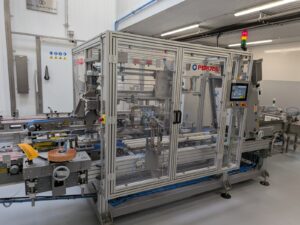
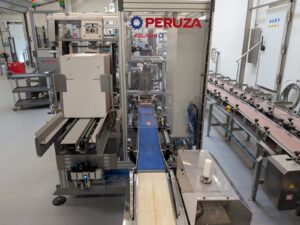
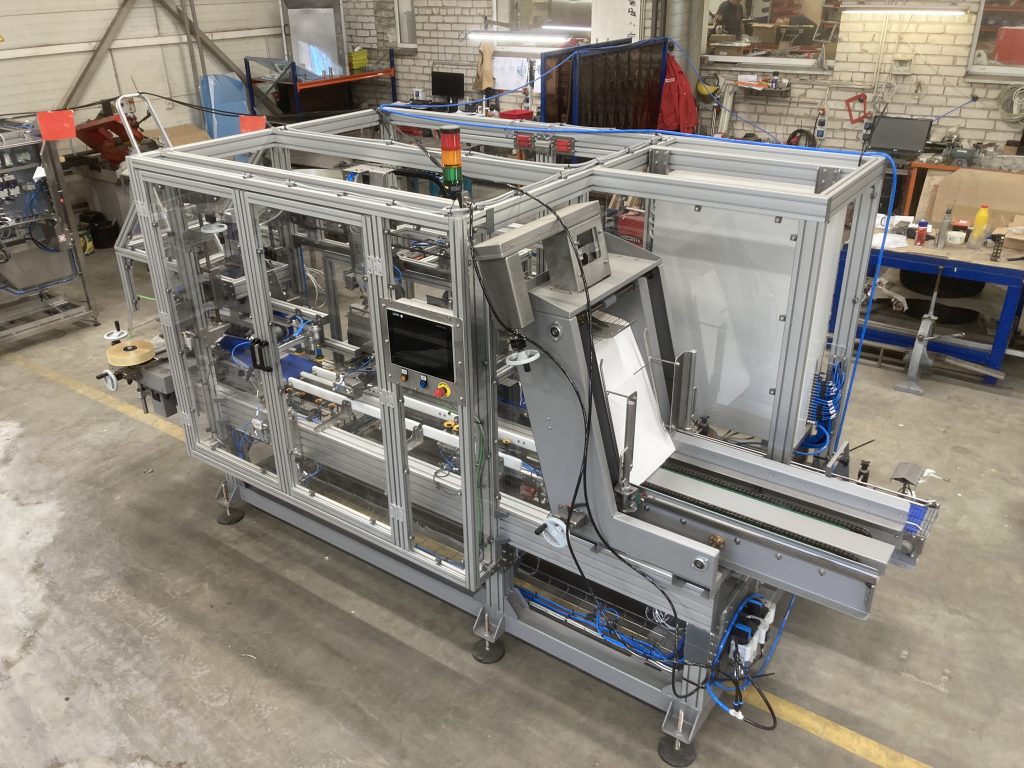
The Side Loader takes care of every stage of the packaging process with ease, from the making of the box to the placing of a secure seal on it. You will never have to worry about the lid coming off because The Side Loader ensures that packs are placed into the box smoothly from the side. As the name suggests, this eliminates the need for the lid. This feature is especially important for products that cannot be accessed from the lid, such as glass jars, products with a narrow neck, aerosol cans, and a wide variety of other containers.
If you have a Side Loader, you will have the ability to accommodate a wide variety of pack configurations within the container. PERUZA acknowledges that every product and circumstance is unique, which is why the Side Loader was designed to be adaptable to your particular requirements. This allows for personalized combinations and pack counts inside the box that are tailored to your requirements. The astonishing maximum capacity of the Side Loader is forty packs per minute of operation! This indicates that you are able to boost productivity without lowering the quality or precision of your work.
To Sum Up: The Importance of Sustainable Packaging
The challenges faced in food packing can be overcome through the effective utilization of equipment and automation. By leveraging intelligent robotic systems capable of handling products of different sizes, shapes, and types, manufacturers can ensure efficient and accurate packing. Additionally, innovative grasping mechanisms, such as side loaders, provide enhanced protection for fragile components during stacking. Furthermore, consolidating multiple packaging stages into a single machine, as demonstrated by the Side Loader, significantly optimizes space, reduces costs, and improves overall efficiency.
As robotics, automation, and machinery develop, you must look into the best possible solutions now. Adopting new technologies and innovative solutions is essential to stay competitive in the food packaging industry as challenges and consumer preferences continue to evolve. If you’re interested in learning more about how PERUZA can help you get the best results with your food processing, feel free to get in touch at info@peruza.com, and we’ll be happy to discuss the possibilities of us creating something great for your fish processing business!