
Fish trimming, an artful process that turns raw fish fillets into market-ready products, has evolved significantly over the past decades. In a global seafood industry valued at around $254.2 billion annually, the efficiency and precision of fish processing are not just crucial; they are the backbone of profitability and quality assurance.
The trimming process, which involves meticulously removing imperfections and ensuring the fillet’s pristine appearance, balances traditional methods with modern advancements, with manual trimming lines playing a central role in today’s processing facilities.
Traditionally, fish trimming was a purely manual task. Workers stood at trimming tables, meticulously removing fins, fatty tissue, and other remnants from the fillet’s edges.

This labor-intensive work required a keen eye and deft hands, ensuring that every fillet leaving the line was uniform and ready for the market. However, as demand for seafood grew, the limitations of this manual approach became evident. Speed, consistency, and safety were challenging to maintain, particularly in large-scale operations.
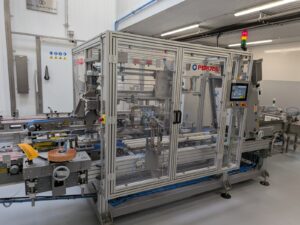
The early 2000s marked a turning point when first companies from Europe introduced automated trimming machines. These devices, equipped with cameras and precision blades, promised to revolutionize the industry. They scanned each fillet, calculating the exact cuts needed to remove unwanted parts while preserving as much usable product as possible.
While these trimming machines were initially designed to complement existing processes, their efficiency and ability to handle rough fish processing with minimal human intervention have kept them highly valuable in the industry. Within 10 to 15 years, companies integrated trimming into filleting machines, streamlining the process even further. This meant that fish could be filleted and trimmed in a single pass, increasing efficiency and reducing the need for additional manual intervention.
However, despite the advancements in automation, certain aspects of fish trimming remain beyond the reach of machines. This is where manual trimming lines come back into play, particularly in the specialized task of segmenting fillets into specific parts.
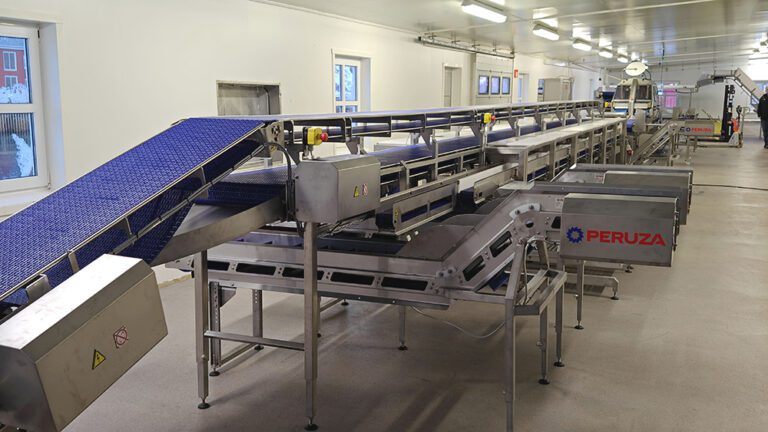
The back fillet, or loins, is the most valuable; the tail, belly, and trim (the remnants) all require careful separation, which can only be achieved through skilled manual labor. No machine, regardless of its sophistication, can replicate the precision and decision-making required to produce these cuts consistently.
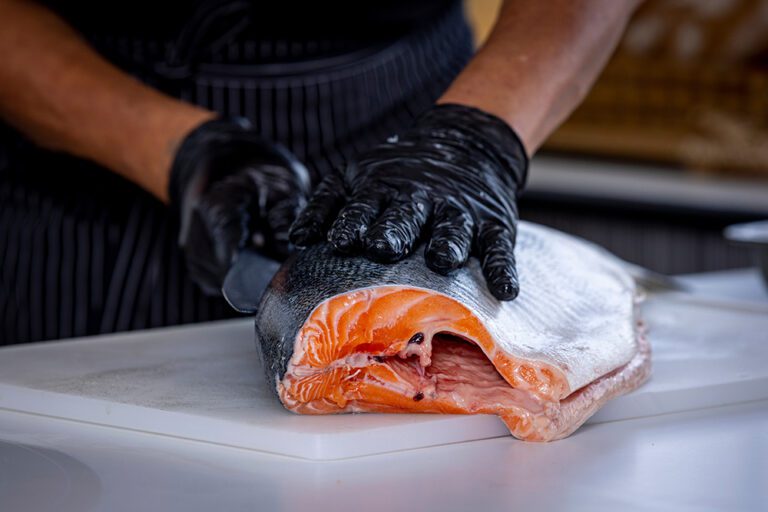
Modern manual trimming lines, far from being relics of the past, have embraced technology to enhance their efficiency and safety. Today’s trimming lines are equipped with multiple conveyors and specialized workstations where trained operatives cut fillets into their constituent parts. Workers on these lines may receive gutted and scaled fish for further processing, ensuring that the product is ready for trimming. The setup of these lines can vary significantly, with some designed for just two workers and others accommodating up to 12 or more.
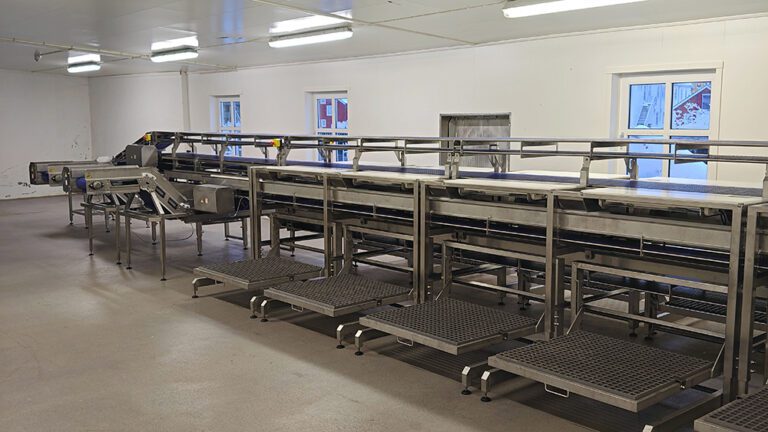
The positioning of workers -whether on one side or both sides of the line – can be tailored to the specific needs of a processing plant, allowing for flexibility in operations. Companies can choose different configurations and equipment to best suit their production requirements and workflow.
Intelligent trimming lines take this a step further by integrating software that tracks and analyzes the trimming process in real-time. This technology weighs the incoming fillets, records data on trimming efficiency, and generates detailed reports. These systems provide valuable information and learn from collected data to continuously improve trimming performance and accuracy.
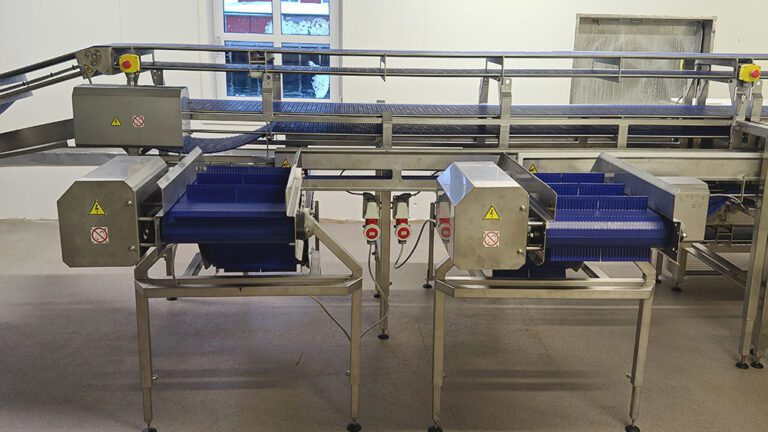
Supervisors can use this data to monitor individual workers’ performance, identify areas where waste is higher than expected, and make adjustments to improve overall productivity. They can also review this information to make important changes in the process, optimizing yield and quality. In an industry where every gram of fish counts, this level of insight is invaluable.
Moreover, the workstations on these lines have been designed with safety and quality in mind. Modern trimming tables often feature powerful lighting beneath the surface, allowing workers to inspect fillets for parasites and other imperfections that might otherwise go unnoticed. In some cutting technologies, water and touch are used to optimize the cutting process, and the right amount of pressure is applied to achieve the best results.
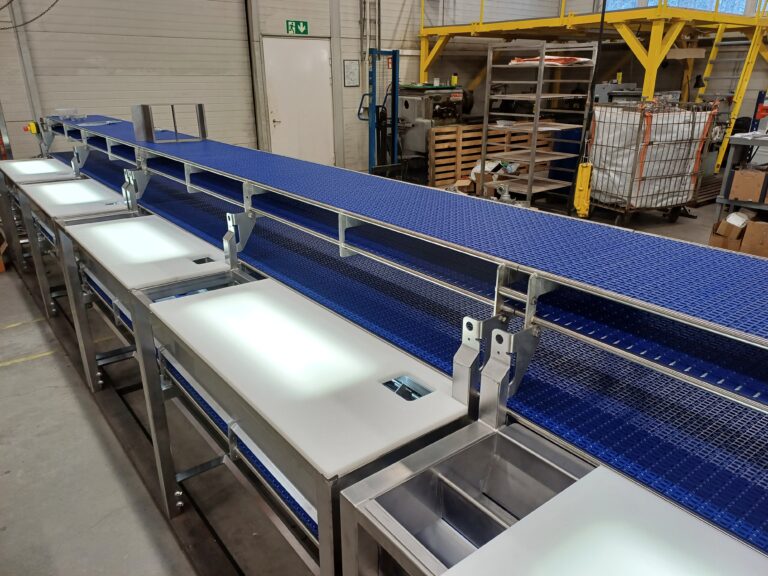
This not only ensures that only the highest quality product reaches consumers but also protects the reputation of the processing plant and the broader industry.
During the separation of fillet parts, machines and workers carefully separate and slice the fish, making sure to leave as much meat as possible on the fillet and not left on the bone, minimizing waste and maximizing value.
In conclusion, the fish trimming process, while deeply rooted in tradition, has evolved into a sophisticated blend of manual skill and technological innovation. Manual trimming lines, especially the intelligent variants, have proven indispensable in maintaining the quality and efficiency of fish processing in an increasingly demanding market. Finally, as we look to the future, while automation will continue to play a role, the expertise of skilled workers on the trimming line remains irreplaceable.
We invite readers to share their own ways and experiences with fish trimming. For more information and services, visit company sites, where images and examples of trimming processes are shown.
Introduction to Fish Trimming
Fish trimming is an essential step in the journey from whole fish to a high-quality final product. This process focuses on removing unwanted parts such as fat, red muscle, and the bloodline to reveal the clean, pure flesh of the fillet. Achieving the best results requires a very sharp knife blade, as even the slightest dullness can affect the precision of each cut. In fact, professionals often re-hone their blades after trimming just one fillet to maintain the highest standards of quality. Mastering the art of trimming takes time, practice, and patience, as each type of fish presents its own unique challenges. Whether working with whole fish or specific fillet cuts, trimming is a critical step that directly impacts the appearance, taste, and overall quality of the final product. By carefully removing excess fat and skin, processors can significantly improve the value and appeal of their fillets, making this process indispensable in the fish industry.
Anatomy of a Fish
A thorough understanding of fish anatomy is vital for anyone involved in trimming and filleting. Key parts of the fish, such as the dorsal fin, tail, and the overall structure of the whole fish, must be considered during processing. The filleting process begins by separating the fillets from the main body, but the trimming process goes further, refining these fillets by removing any remaining bones, fins, or unwanted tissue. Navigating around the spine and ribcage requires skill to avoid damaging the delicate flesh, which is made up of different types of meat, including both red and white muscle. Each part of the fish, from the head to the tail, presents its own set of challenges and opportunities for maximizing yield and quality. By understanding the unique structure and composition of each fish, processors can ensure that only the best parts are used in the final product, while minimizing waste and preserving the integrity of the flesh.
The Fish Trimming Process
The fish trimming process is a series of carefully executed steps designed to transform raw fish into a premium final product. It typically starts with skinning, where the skin is removed from the fillet to expose the underlying flesh. Next comes trimming, which involves removing fat, red muscle, and the bloodline to enhance the fillet’s appearance and taste. The final step is cutting, where any remaining bones or unwanted parts are meticulously removed to ensure a clean, boneless fillet. Each of these steps requires precision and attention to detail, as even a small mistake can affect the quality of the final product. There are different types of trimming methods available, including manual and automated approaches. Manual trimming offers greater control and flexibility, while automated systems can increase speed and consistency. The choice of method depends on the specific needs of the production site, the type of fish being processed, and the desired quality of the end product. Regardless of the method, the goal remains the same: to deliver fillets that are clean, attractive, and ready for market.
Modern Manual Trimming Lines
Modern manual trimming lines have revolutionized the way fish are processed, offering a blend of traditional craftsmanship and advanced technology. These lines are organized into a series of specialized stations, each dedicated to a specific task such as skinning, trimming, or cutting. At each station, workers are equipped with the necessary tools to efficiently handle different types of fish and meet the unique requirements of each production run. The flexibility of these systems allows companies to customize their lines based on the species being processed, the volume of production, and the desired quality of the final product. By streamlining the workflow and providing ergonomic workspaces, modern manual trimming lines help reduce labor costs while maintaining high standards of quality. These systems are designed to handle everything from whole fish to pre-filleted portions, making them a versatile solution for fish processing companies looking to improve efficiency and product consistency.
How Modern Manual Trimming Lines Improve Efficiency
Modern manual trimming lines offer a range of benefits that significantly improve the efficiency of fish processing operations. By integrating specialized equipment and ergonomic workstations, these lines help reduce the amount of manual labor required, allowing companies to lower costs and allocate staff to more value-added tasks such as quality control. The design of these systems supports a high degree of automation for repetitive tasks like skinning and cutting, while still enabling skilled workers to focus on the finer points of trimming and inspection. This combination not only boosts productivity but also enhances the quality of the final product by minimizing the risk of contamination and ensuring precise, consistent cuts. Additionally, modern manual trimming lines can be easily adapted to process different types of fish and accommodate varying production volumes, providing companies with the flexibility to respond to changing market demands. By adopting these advanced systems, fish processing companies can achieve higher yields, better product quality, and a more efficient overall operation.
Photos source: Normar Trading AS